
Four hardware advances led to the second-generation computers of the early 196Os: the transistor, magnetic core memory, magnetic tapes, and magnetic disks. Transistors replaced the vacuum tubes of first-generation machines. A transistor is a small component made of solid material that acts like a vacuum tube in controlling the flow of electric current (see picture below).
Using transistors in computers resulted in smaller, faster, and more reliable machines that used less electricity and generated much less heat than the first-generation computers.
Just as transistors replaced vacuum tubes as primary electronic components, magnetic cores replaced magnetic drums as memory units. Magnetic cores consisted of tiny rings of magnetic material strung on fine wires. Each magnetic core was placed at the intersection of a vertical and horizontal wire. To turn on a core, half the electricity needed was run through each wire. Thus, only at the intersection of specific wires would a core become charged. In this way, groups of cores stored instructions and data (see picture below).
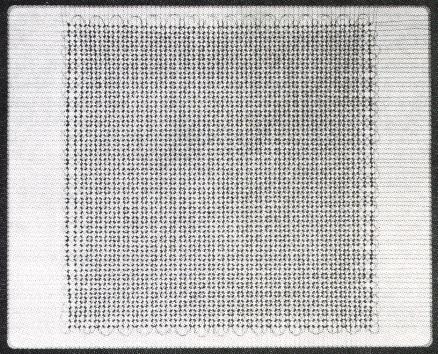
The development of magnetic cores resulted from the U.S. Navy's need for a more advanced, reliable high-speed flight trainer. Known as Whirlwind I, the navy project was one of the most innovative and influential projects in the history of the computer. Because of the high speed with which instructions and data could be located and retrieved using magnetic cores (a few millionths of a second), the Whirlwind allowed the real-time processing necessary in flight simulation. (Real time describes the ability of the computer to provide output fast enough to control the outcome of an activity.) The development led to other real-time functions such as air traffic control, factory management, and battle simulations.
This new type of memory was supplemented by storage on magnetic tapes and disks. During World War II, the Germans used huge, heavy steel tapes for sound recording. Plastic magnetic tapes eventually replaced the metal tapes, and later were tried for recording computer output. Output was recorded in the form of magnetized spots on the tape's surface. Another by-product of sound recording, the platter, led to the introduction of the magnetic disk. Much as a record is "accessed" on a jukebox, magnetic disks allowed direct access to data, contributing to the development of real-time activities such as making airline reservations. Disks and tapes greatly increased the speed of processing and enlarged storage capacities, and they soon replaced punch cards.
During this period, more sophisticated, English-like computer languages such as COBOL and FORTRAN were commonly used.