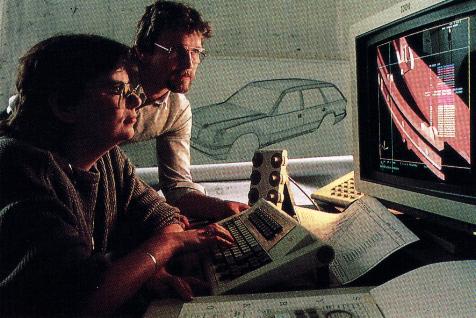
Computer aided engineering (CAE) systems,
which are used in the design of products, are tools for the "front
end" of product design. Engineers use CAE systems for everything from
the initial design concept to production drawings. A CAE system works
a little like a word processing system. Word processors allow users
to make changes to text at any point during the creation of a
document. Users can correct mistakes as soon as they are identified.
Similarly, CAE systems allow engineers to interact with the computer
during simulation runs as errors are identified. Most CAD systems, on
the other hand, run through an entire simulation before mistakes are
identified, and a simulation for a complex computer chip design, for
example, can take several days. Because CAE allows engineers to make
design changes as they are identified, product prototypes frequently
work on the first try. Using a CAE system, Hewlett-Packard designed a
computer chip in seven months that normally would have taken two
years to design. By cutting design time, CAE systems can
significantly affect company profits.
Businesses are continually looking for ways to use computers to improve efficiency and increase profits. In many instances those companies that have developed creative ways of using computers have gained a competitive edge over their competition. For example, Ford Motor Company introduced an information storage system to improve customer relations and create dealer loyalty. Ford recognized that dealers who needed parts for repairs often had difficulty locating them. While dealers were trying to locate the necessary parts, customers waited impatiently for repairs. Together with AT&T Information Systems, Ford developed a greatly improved parts inventory system for dealers. A digital network, Net/1000, helps dealers search the inventories of other dealers for needed parts. Now customers are enjoying faster service; Ford is enjoying improved customer relations; and dealers are experiencing improved customer loyalty. In order to compete, other companies must also develop sophisticated information systems like the one used at Ford.